Top 10 Daily Living Activities Caregivers Help With
Families rarely open with a list when they call about home care. They open with a story. Dad has stopped showering because the tub feels dangerous. Mom is eating toast three times a day because standing at the stove wears her out. What sounds like a dozen separate problems is usually one problem wearing different clothes: the daily routine has gotten harder than the person can manage alone.
Care professionals have a useful vocabulary for this. The tasks that make up a day get sorted into categories, and understanding those categories makes it much easier to work out what help is needed and how many hours it takes. Below is that framework, followed by the ten activities of daily living caregivers help with most often.
ADLs and IADLs: What the Terms Actually Mean
Activities of daily living, usually shortened to ADLs, are the basic self care tasks a person has to accomplish to get through a day. The list is short and physical: bathing, dressing, grooming, toileting and continence, eating, and transferring, which means moving from bed to chair or chair to standing. These are the tasks a person learned as a small child and, in most cases, the last ones they give up.
Instrumental activities of daily living, or IADLs, are the tasks that let someone run a household rather than just care for their body. Cooking. Cleaning. Laundry. Shopping. Driving or arranging rides. Managing appointments, mail and bills. IADLs are more complex, more cognitive, and much more sensitive to memory.
The practical point is that IADLs almost always go first. Someone who still bathes and dresses perfectly well may have quietly stopped cooking, stopped driving at night and stopped opening the mail months before anyone noticed. If you only watch for ADL decline, you will be late.
When you are assessing a parent, walk the house rather than asking questions. Open the refrigerator. Look at the mail pile. Check the laundry. Look at the shower floor. IADL decline is visible in the environment long before anyone will admit to it out loud.
The 10 Activities Caregivers Help With Most
These are the ten that come up in nearly every care plan we write, roughly in the order families tend to ask about them.
1. Personal grooming
Hair, shaving, nails, skin, oral care and getting dressed in real clothes rather than whatever is nearest. Grooming is easy to treat as cosmetic and it is not. It is one of the clearest markers of how someone feels about themselves, and often the first thing to slip when energy or mood drops. A caregiver can do as much or as little as the person wants.
2. Bathing and hygiene
Bathing is where most families first realise outside help is needed, because the risk is highest and so is the awkwardness. Wet tile, a high tub wall and no grab bar is a genuinely dangerous combination. A caregiver can assist with a shower, tub bath or bed bath, manage water temperature, help with transfers, and handle toileting and continence care with the privacy the moment deserves.
3. Meal preparation and help with eating
Planning meals, shopping, cooking, serving and, when needed, helping someone eat. Caregivers follow dietary guidance the client’s doctor or dietitian has already given. They do not create medical diets or prescribe nutrition plans. What they do is make sure real food actually appears three times a day, which for many older adults living alone is the highest value hour of the week.
4. Light housekeeping
Dishes, wiping counters, vacuuming, taking out the rubbish, tidying walkways, making the bed. This is not a deep clean and not a substitute for a cleaning service. The purpose is narrower and more important: keeping the home navigable and sanitary so nobody is tripping over clutter or eating off dishes that were not washed.
5. Laundry and linens
Washing, drying, folding, putting away, and changing bed linens on a regular schedule. This matters more than it sounds. Carrying a basket down basement stairs is a fall waiting to happen, and fresh linens make a real difference for anyone spending a lot of time in bed or dealing with incontinence.
6. Medication reminders
Read this one carefully, because the distinction is not a technicality. A non medical caregiver provides reminders and cues. They can say it is nine o’clock and time for the morning pills, bring water, hand over the organiser, and confirm the person is settled. They can flag to the family that a compartment is still full on Thursday. They cannot open bottles, measure doses, fill an organiser or put medication in someone’s mouth. Administration belongs to the client, a family member or a licensed professional.
7. Mobility and transfers
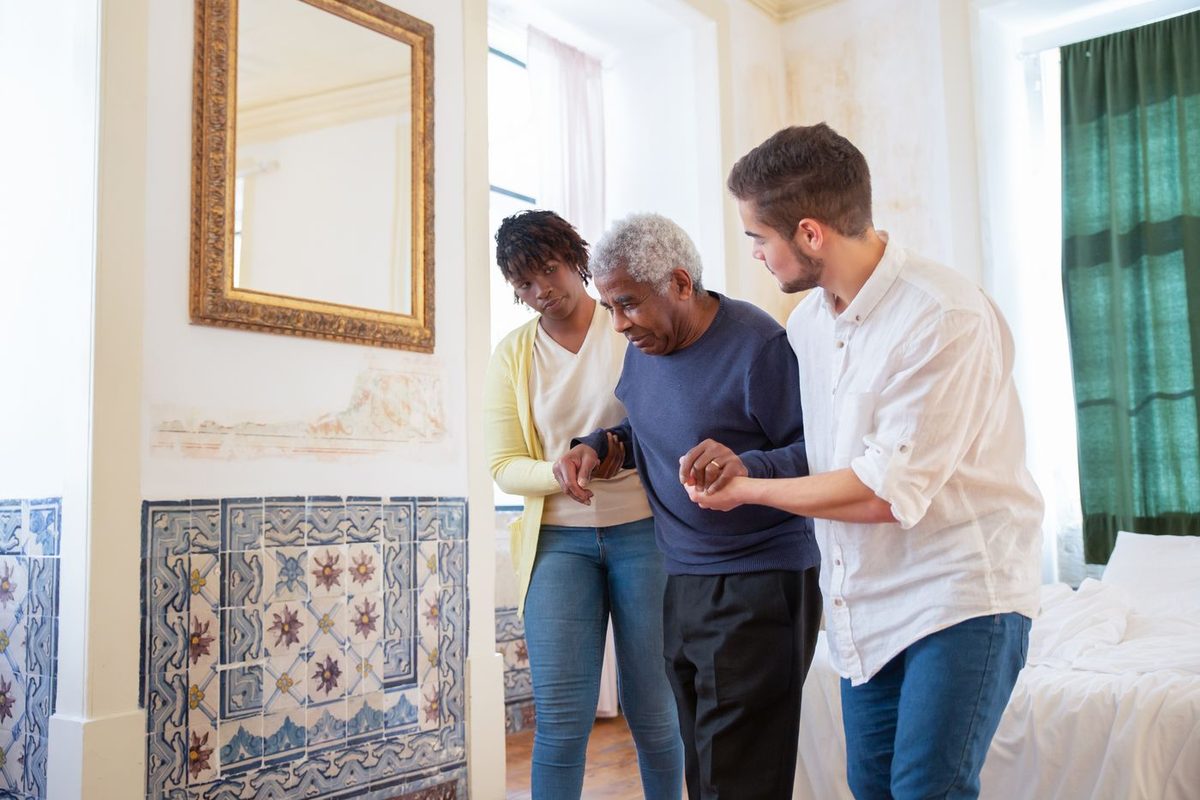
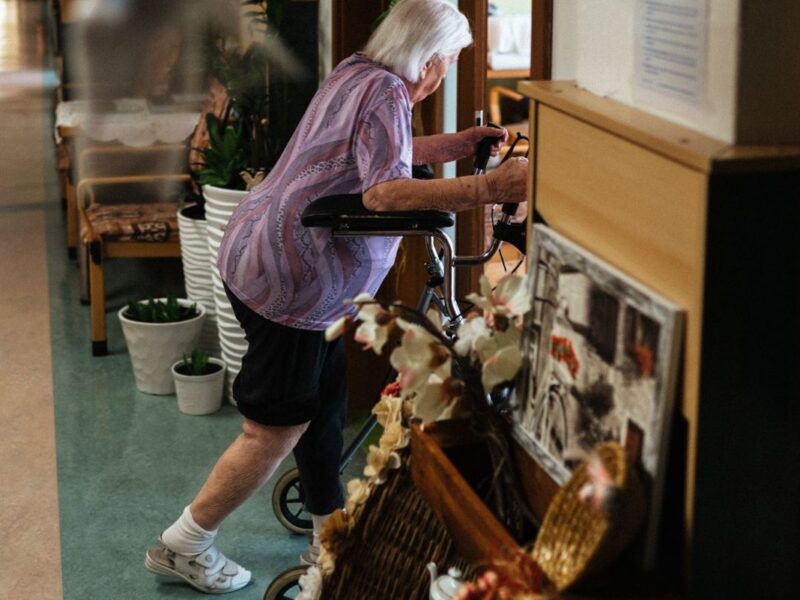
Helping someone stand, sit, walk, use a cane or walker, and move between bed, chair, toilet and car. Good transfer technique is trained and specific, and it protects the caregiver’s back as much as the client. Steady support helps reduce the risk of falls, though no service can eliminate that risk, and anyone who says otherwise is selling something.
8. Companionship
Conversation, cards, puzzles, music, looking through photographs, sitting on the porch, going for a walk. It is the part of the job that looks least like work and is frequently the part the client values most. For an older adult who lives alone, a caregiver may be the only person they speak to face to face on a given day. That is not a small thing.
9. Transportation and errands
Rides to medical appointments, the pharmacy, the grocery store, the bank, church, the salon or a friend’s house. Losing the car keys is one of the sharpest losses in later life because it converts every ordinary outing into a favour someone has to ask for. Reliable transportation gives back a piece of independence that is genuinely hard to replace.
10. Home safety monitoring
An extra set of trained eyes on the environment. Rugs that slide, cords across walkways, burned out bulbs at the top of the stairs, a smoke alarm chirping for a battery, a walker set at the wrong height, food well past its date. Caregivers notice these on ordinary shifts and report them, which is how small hazards get fixed before they become incidents.
What Non Medical Caregivers Do Not Do
Being clear about the boundary protects everyone. A non medical caregiver does not perform any task that requires a clinical licence:
- Administering medication of any kind, including injections and eye drops
- Wound care, dressing changes or catheter care
- Taking clinical measurements for diagnostic purposes
- Physical, occupational or speech therapy
- Any nursing assessment, diagnosis or treatment decision
If a loved one needs those services, they need home health or skilled nursing, which is ordered through a physician. The two work well together. It is common for a home health nurse to visit a few times a week while a non medical caregiver covers the daily routine around those visits.
Building a Care Plan That Matches the Real Gap
You do not need all ten. Almost nobody starts with all ten. The useful exercise is to go down the list and mark each item as independent, difficult, or not happening at all. Anything in the last two columns is a candidate for support.
- Walk through the list with the person, not about them, wherever that is possible
- Identify the two or three tasks causing the most risk or the most daily friction
- Look at when in the day those tasks fall, since that determines the shift schedule
- Start with those hours and leave room to add more
- Review after a month, because the first plan is almost never the final plan
Start with the tasks that are unsafe, then the tasks that are exhausting. Everything else can wait.
Care plans should be living documents. A client recovering from a hip replacement may need heavy support for eight weeks and much less afterwards. Someone with progressive memory loss will move the other direction. A plan written once and filed away is not a plan.
Talking It Through With Cater2U
Cater2U Home Care Service provides non medical home care across Indianapolis, Greenwood and the surrounding communities in Marion and Johnson counties. Every care plan starts with an in home assessment, because a list on paper never quite matches what a house tells you in person. We look at the routine, the layout, the stairs, the bathroom and the person, then build hours around what we find.
If you are working through this list for a parent and are not sure which items genuinely need help yet, that is a normal place to be. Call 463-277-4092 and talk it through. Even a short conversation usually brings the next step into focus.
Related reading
Common questions
What is the difference between ADLs and IADLs?
ADLs are the basic self care tasks a person needs to get through the day: bathing, dressing, grooming, toileting, eating and transferring between bed, chair and standing. IADLs are the more complex tasks required to run a household, such as cooking, cleaning, laundry, shopping, transportation and managing appointments and bills. IADLs usually decline first.
Can a caregiver fill my father's weekly pill organiser?
No. Filling a pill organiser counts as medication handling rather than a reminder, so it falls outside non medical care. A caregiver can remind him it is time, bring water, hand him the organiser and let the family know if a compartment was missed. The organiser itself should be filled by the client, a family member, a pharmacist or a licensed clinician.
Does light housekeeping include deep cleaning?
No. Light housekeeping keeps the home safe and liveable during a shift: dishes, counters, vacuuming, rubbish, tidying walkways and making the bed. It does not cover deep cleaning such as scrubbing grout, cleaning carpets, moving heavy furniture or washing exterior windows. Families who need that usually hire a separate cleaning service alongside care.
Can a caregiver drive my mother to her doctor appointments?
Yes. Transportation and errands are a standard part of non medical home care, covering medical appointments, the pharmacy, the grocery store, the bank, church and social outings. Arrangements vary by agency, so confirm the details when you set up the care plan. Cater2U can talk through transportation options at 463-277-4092.
Read next

Why Non Medical Home Care Matters More Than Ever
Non medical home care fills the gap between managing alone and moving out. Here is what it covers, how it differs from skilled nursing, and how to know when it is time.
Home Safety Checklist for Aging in Place
Most homes were built for the people their owners used to be. This room by room checklist shows what to change so a house keeps working as its owner ages.